



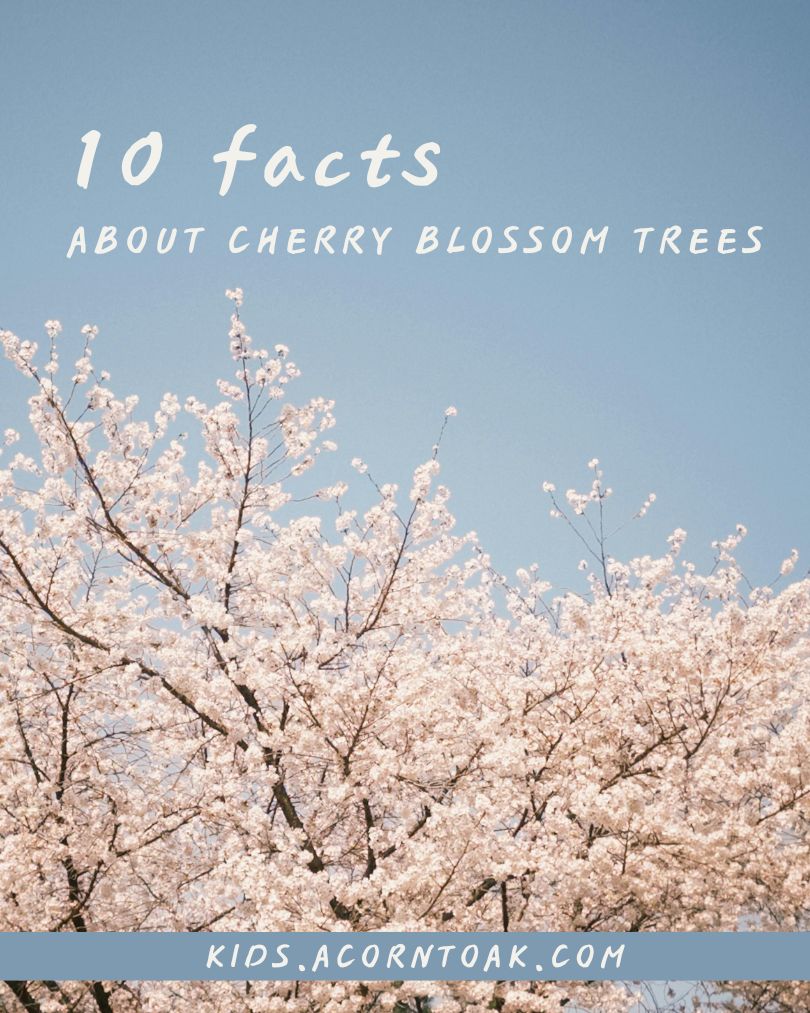
Cherry blossoms, also known as sakura, are one of the most beautiful displays of early spring. These ephemeral trees are celebrated in Japan, and are a symbol of impermanence and renewal. In this nature article, you will learn 10 facts about cherry blossom trees.
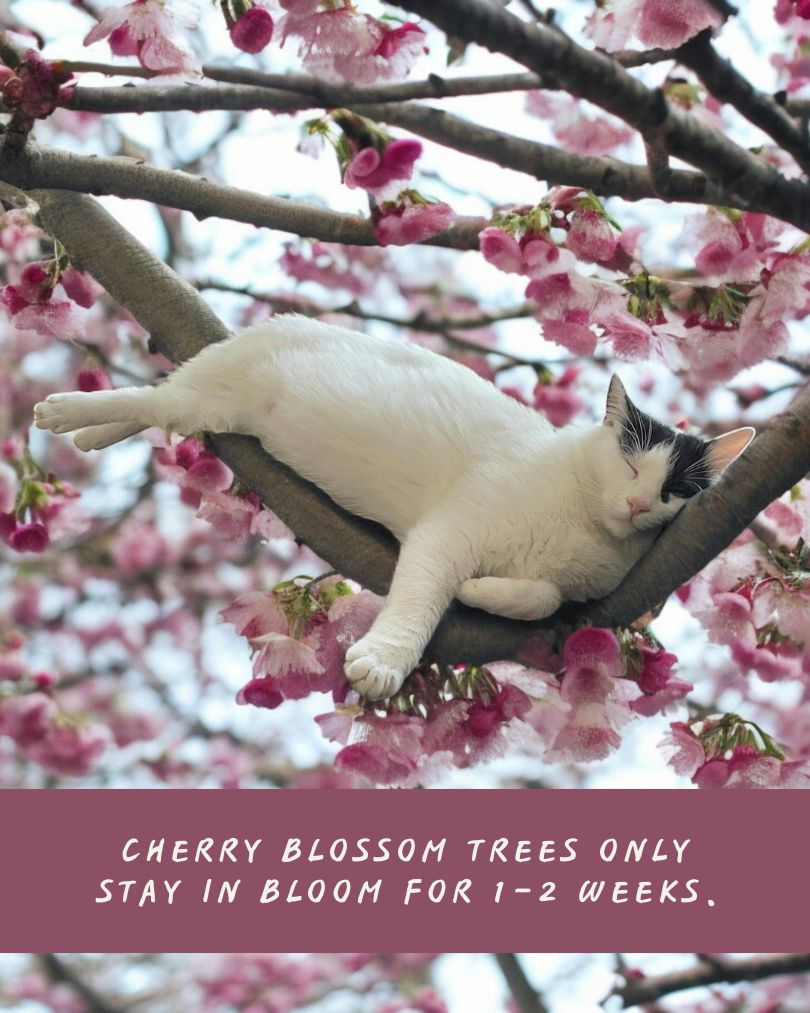
1. Cherry blossom trees only stay in bloom for 1-2 weeks.
Cherry blossoms are one of the first trees to bloom in spring, but their blossoms do not last long. A cherry blossom tree will only stay in bloom for 1-2 weeks. Cherry blossom trees also have a shorter lifespan than many other trees. Cherry blossom trees only live for 30-40 years. In comparison, an oak tree can live for 200-400 years.
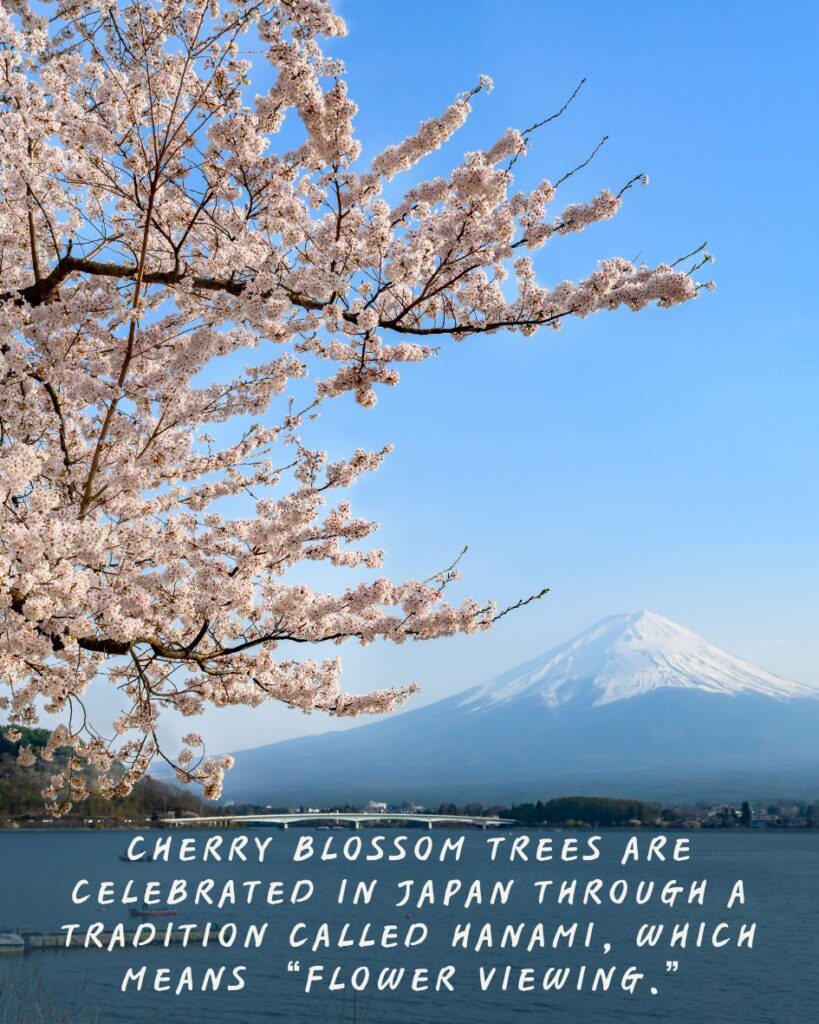
2. Cherry blossom trees are celebrated in Japan through a tradition called hanami, which means “flower viewing.”
In Japan, there are many places to view cherry blossom trees, as sakura season is a widely anticipated event. There are many festivals and flower viewing parties, called hanami, during the season. Sakura is used in various meals, drinks, and bento. Sakura has a floral flavor, with hints of cherry, vanilla, and a slight nuttiness.
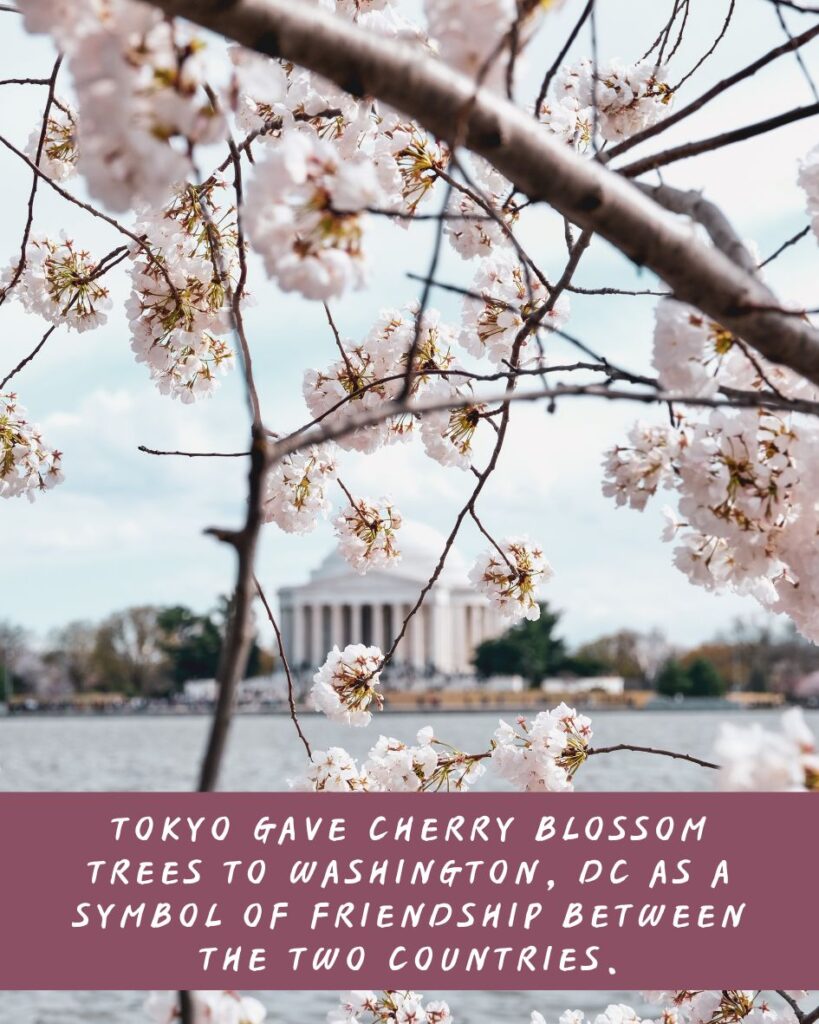
3. In 1912, the city of Tokyo gave more than 3,000 cherry blossom trees to the city of Washington, DC as a symbol of friendship between the two countries.
Thanks to Japan, the United States also has a cherry blossom festival every year.
4. Over 1.5 million people visit Washington, D.C. every year to see cherry blossom trees.
The National Cherry Blossom Festival in Washington, D.C. is the largest springtime celebration in the U.S.
5. Cherry blossoms belong to the Prunus family.
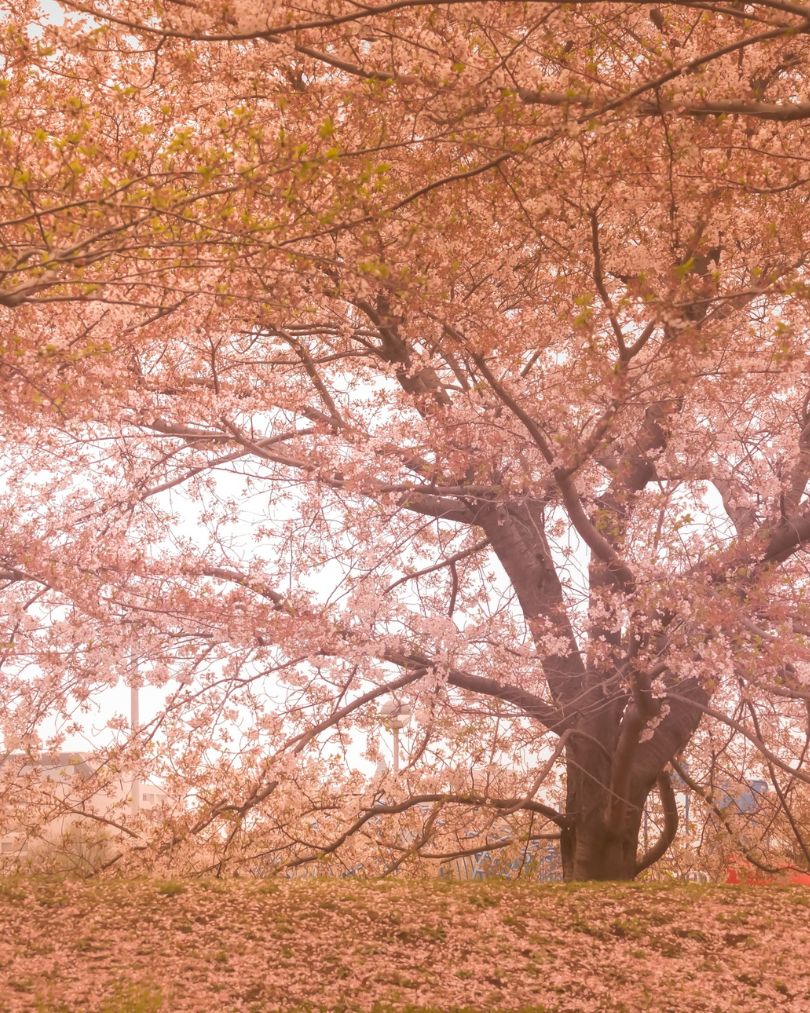
Cherry blossom trees are part of the Prunus, a group of trees that also includes plums, peaches, and almonds.
6. Most cherry blossom trees don’t produce edible cherries
Many ornamental cherry trees are grown only for their flowers. If they produce fruit at all, the cherries are usually small and not tasty.
7. Cherry blossom trees bloom before their leaves grow
Many species flower before leaves appear, which makes the branches look completely covered in blossoms.
8. Scientists track blossom timing
Researchers study cherry blossom bloom dates because they can show changes in climate and temperature over time.
9. Cherry blossoms are important for pollinators
Bees, flies, and other insects visit cherry blossoms to collect nectar and pollen, helping pollinate plants in early spring.
10. There are hundreds of varieties of cherry blossom.
There are over 300 cultivated varieties of cherry blossom trees, with flowers ranging from white to deep pink and sometimes with dozens of petals.
Vocabulary
– ephemeral: last for a very short time.
– impermanence: a state of lasting for a short time.
– renewal: the act of beginning again or becoming new.
– hanami: “flower viewing” parties in Japan.