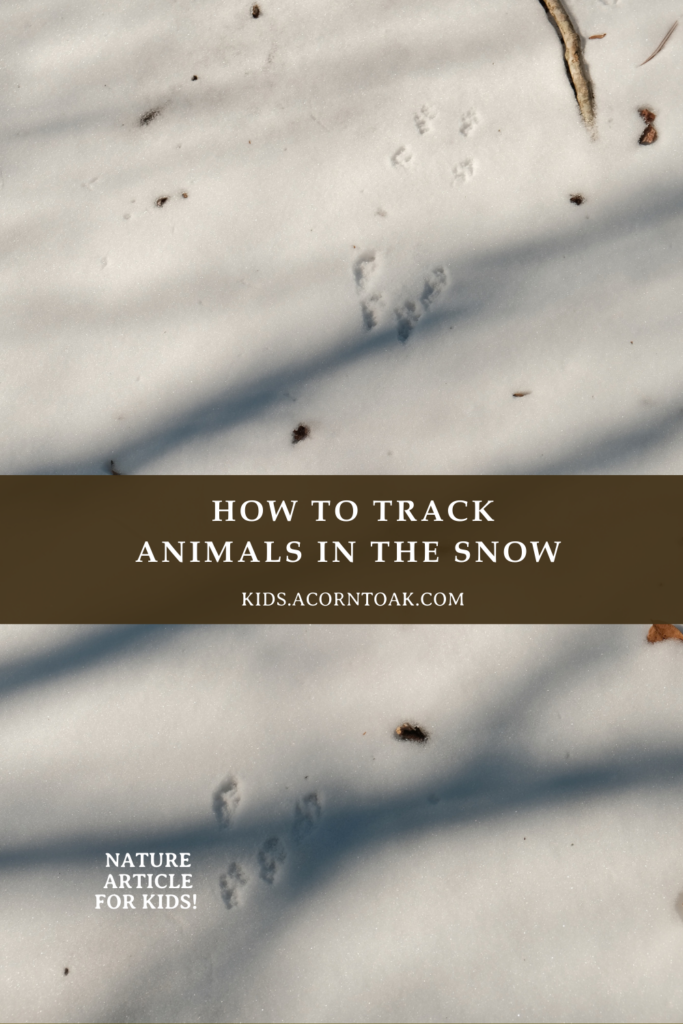




Mud season often gives a unique opportunity to look for animal tracks, especially if there is still snow on the ground. “Mud season” refers to the few weeks in between winter and spring, when the ground is covered in mud. These are some commonly found animal tracks, and some tips to identify them.
1. Squirrel
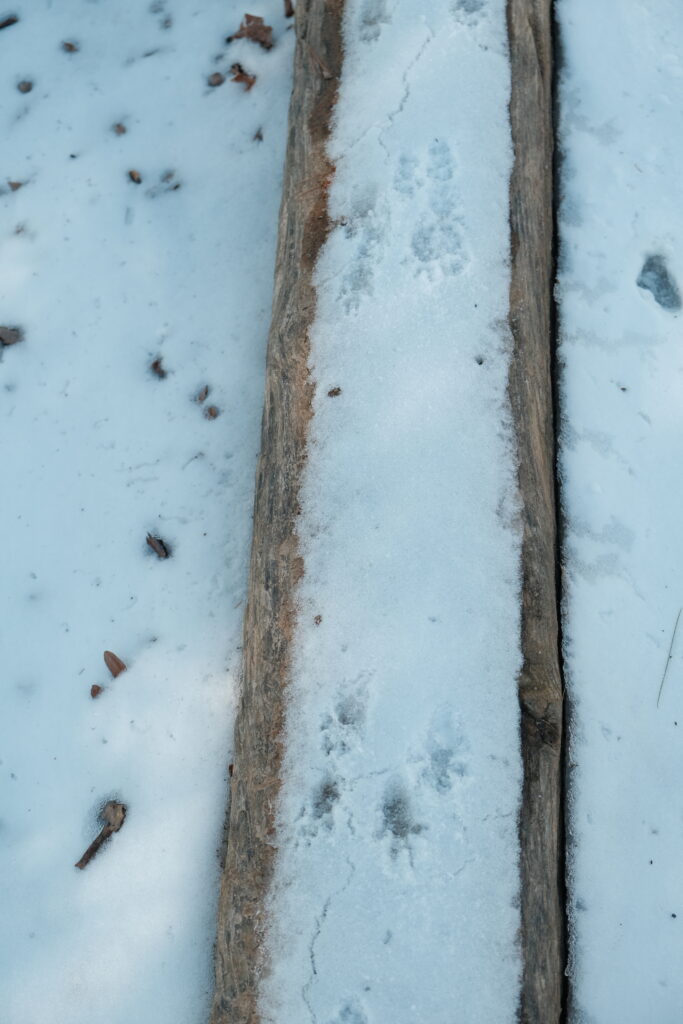
Tracking Clues:
- Four prints are seen together in a group. This is because squirrels move in a bounding hop.
- The front paws are smaller than the hind paws.
- You may see claw marks. Squirrels have sharp claws for climbing.
- Squirrel trails often zig-zag. Squirrels do not typically run in a straight line for very long.
2. Ducks and Geese
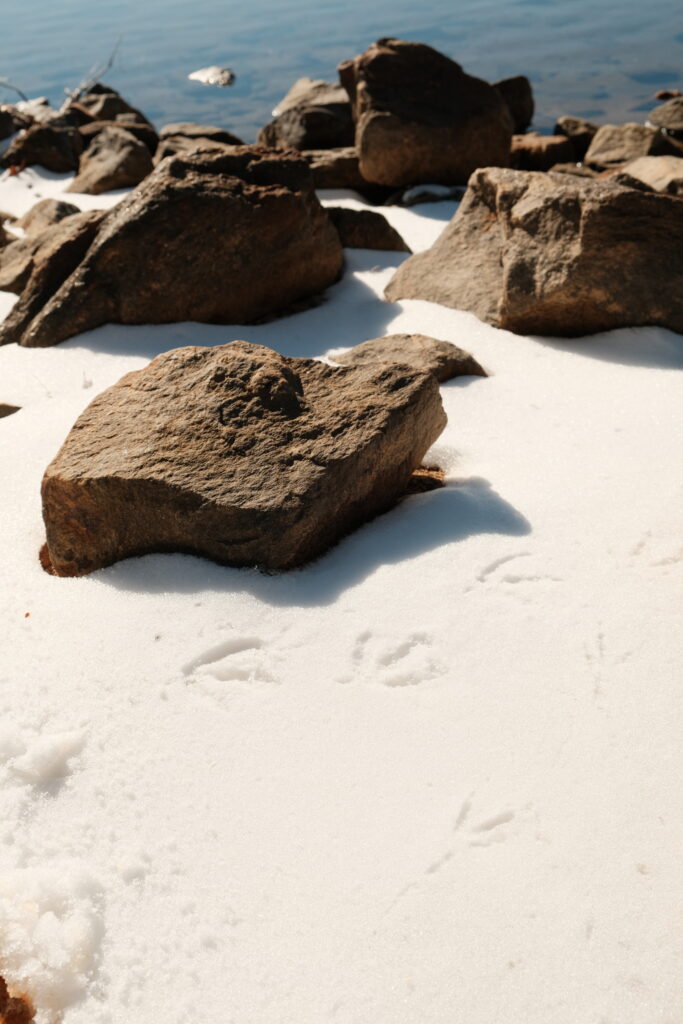
Both duck and geese prints have 3 toes and webbing between them. Although duck and geese prints look very similar, but there are a few differences that can help tell them apart.
Tracking Clues:
- Duck prints are usually 2-3 inches long, while geese prints are 4-7 inches long.
- Ducks waddle, so their prints often zig-zag. Goose tracks are more straight and purposeful.
- Geese prints sometimes have a hind toe mark behind the print.
- Both prints are often found next to water.
3. Raccoon
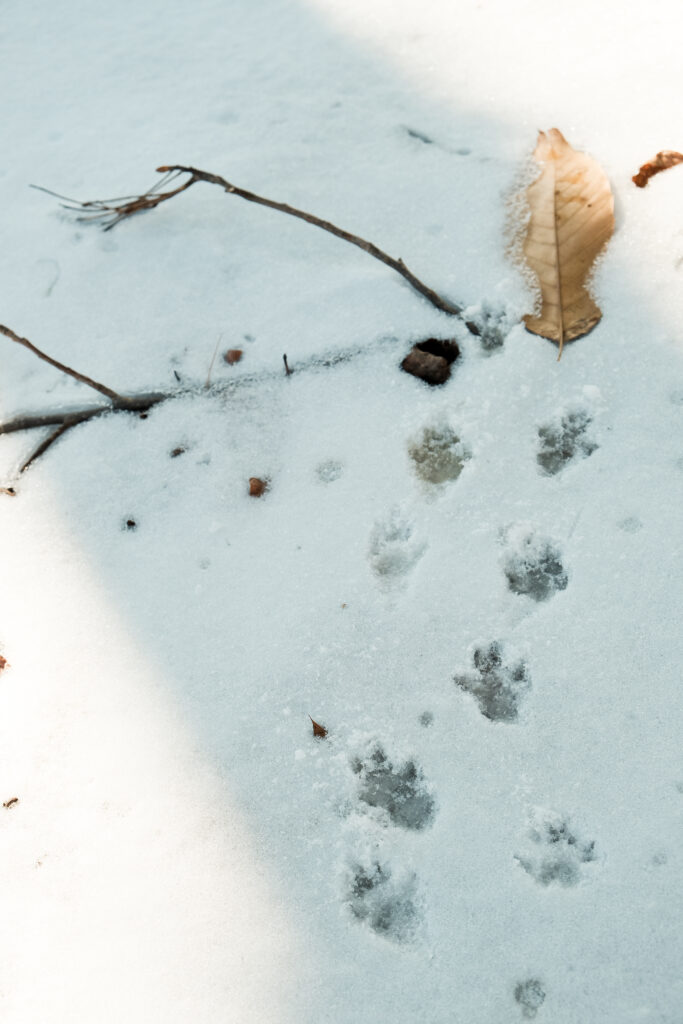
Tracking Clues:
- Raccoon tracks are some of the easiest animal tracks to recognize because they look a lot like tiny human hands.
- Front feet are smaller than the back feet.
- Claw marks are found at the tips of the toes.
4. Songbirds
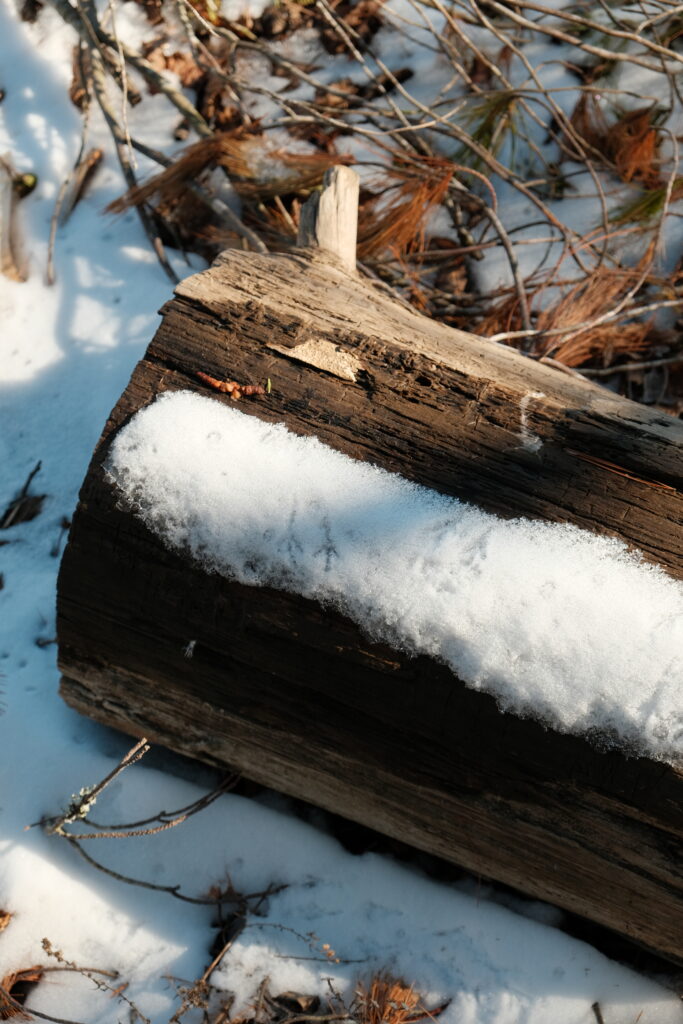
Tracking Clues:
- Songbird tracks are small and delicate, usually less than 1 inch long.
- Three toes pointed forward while one points backward.
- Many songbirds hop instead of walk, so their prints will be in clusters.
4. Deer
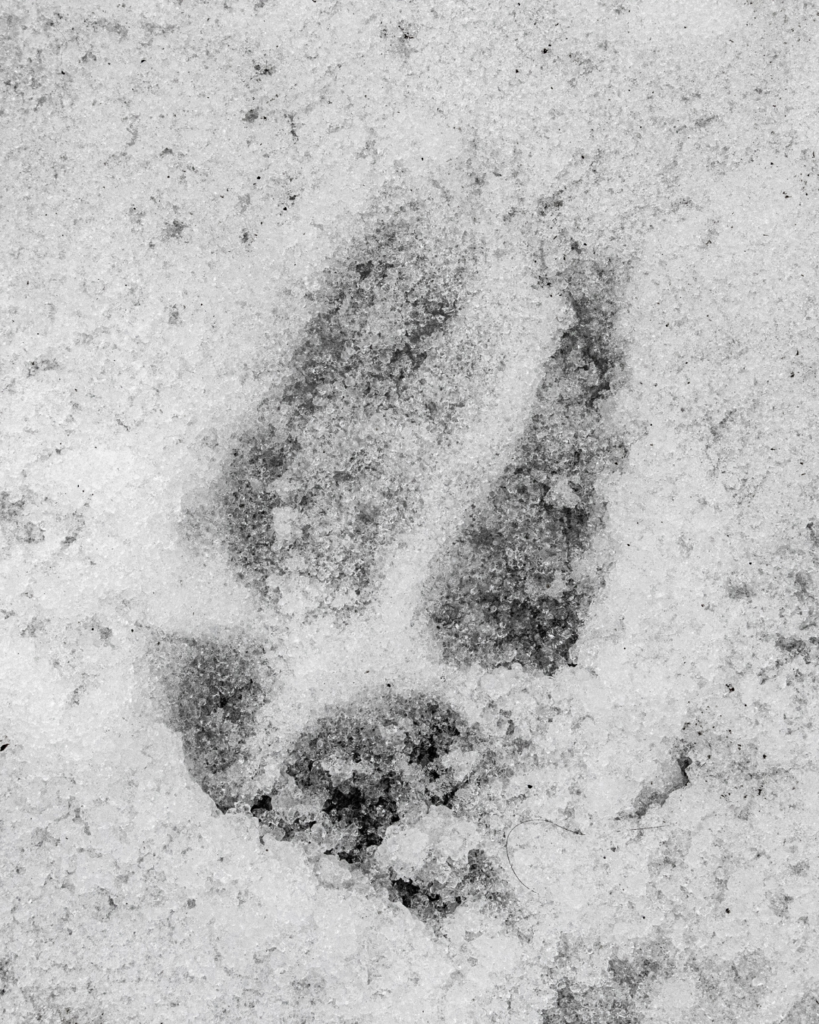
Tracking Clues:
- Deer tracks have two pointed hoof marks. Deer have split hooves, so each track shows two narrow halves.
- A deer hoof is heart-shaped.
- Adult deer tracks can be 2-4 inches long.
These tips should help you identify some of the most common animal tracks. Happy tracking!