



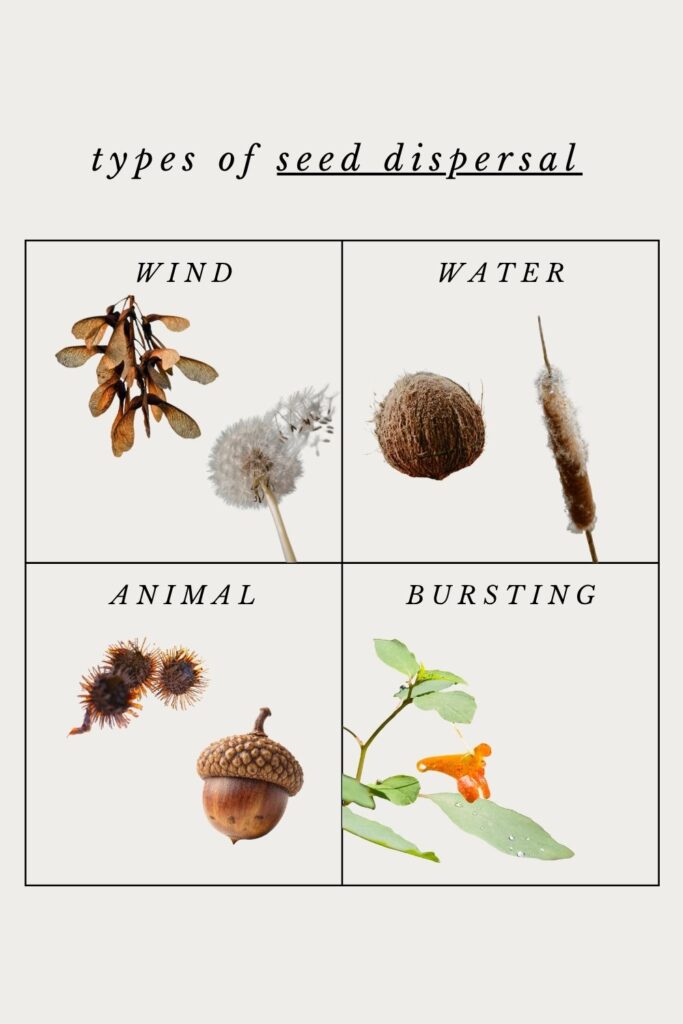
Have you ever wondered how seeds travel from one place to another? In botany, seed dispersal is the movement of seeds away from the parent plant. If seeds dropped directly below from a plant and never traveled away from it, plants would crowd together. They would compete for resources such as sunlight, water, nutrients, and space. To survive, seeds have evolved in various ways to ensure they can travel far from the parent plant.
Seeds Travel By Wind
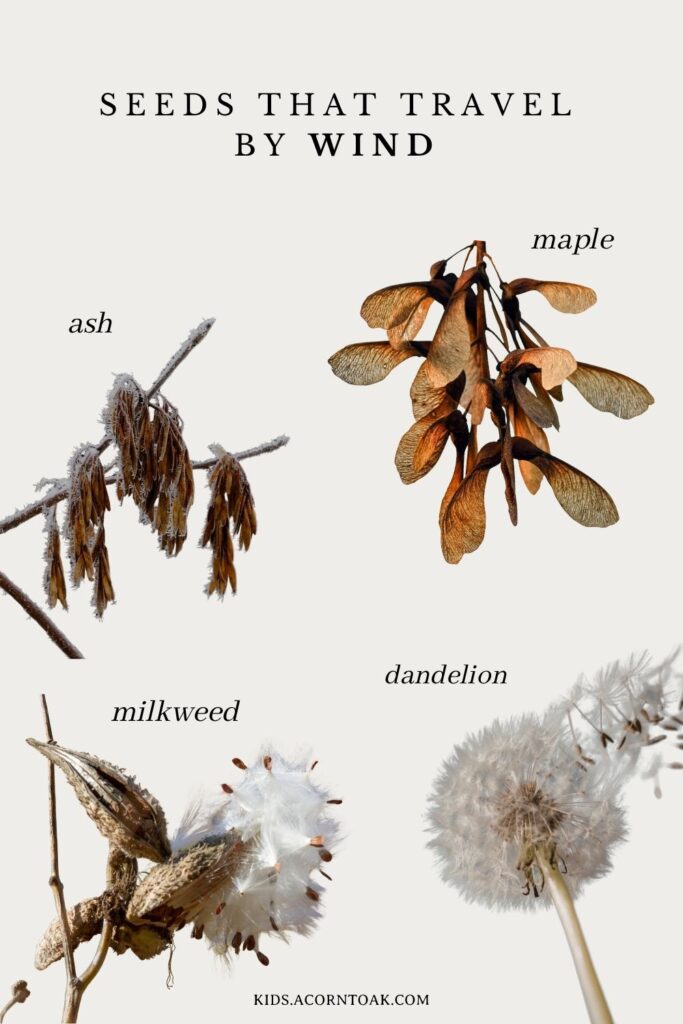
Seeds like dandelion and milkweed are light and fluffy, which helps them travel by wind. Seeds like those of the maple and ash have wings, which help them fly like helicopters in the sky.
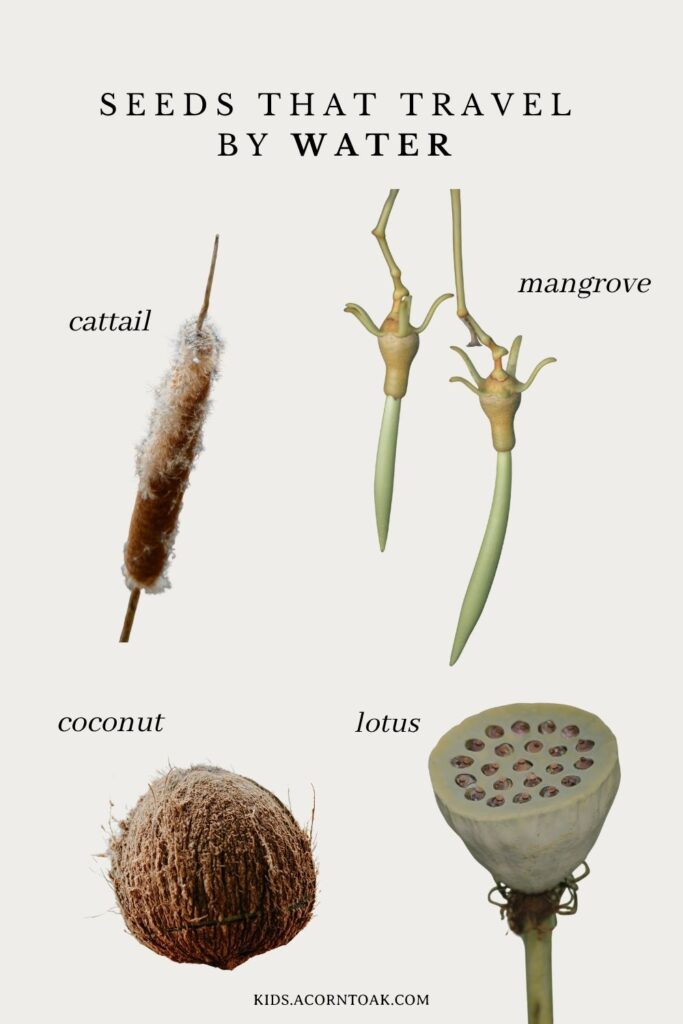
Seeds Travel By Water
Some seeds can float to travel across rivers, streams, or even oceans. Some seeds are waterproof, which helps them travel by water. Plants that grow by water often have seeds that can withstand harsh elements. A coconut can travel for weeks before finding the beach it will land on!
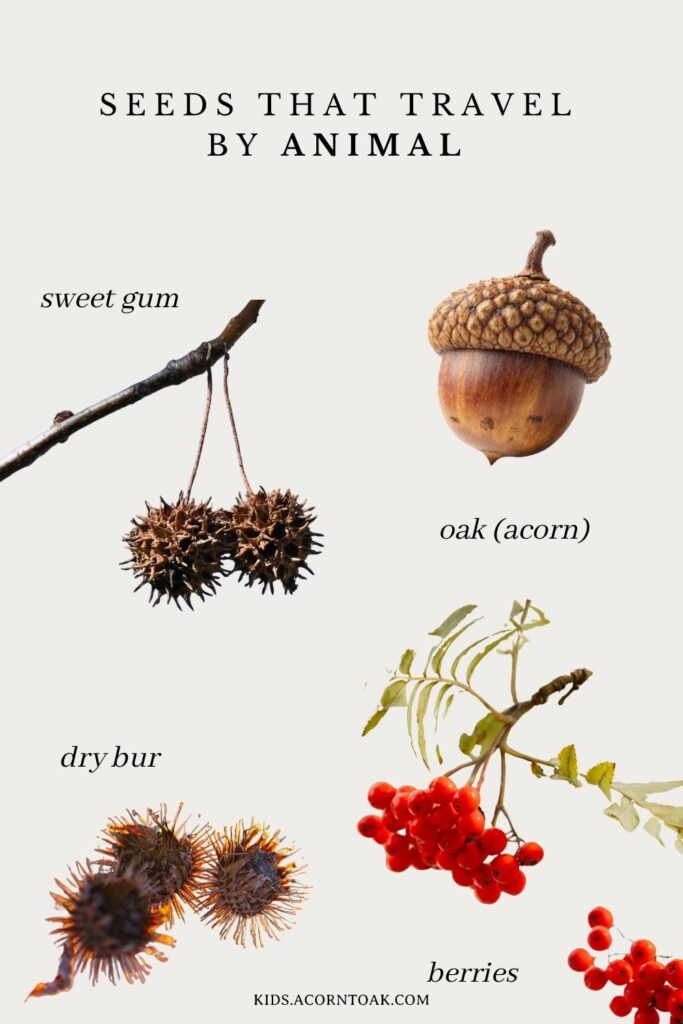
Seeds Travel By Animal
Animals help seeds get around! Squirrels hide nuts and acorns, and often forget where they burried them. These forgotten seeds become new trees! Animals eat berries and leave them behind in their poop. Some seeds are sticky or have burrs. These get stuck to the animal’s fur, which helps them travel to distances far and wide.
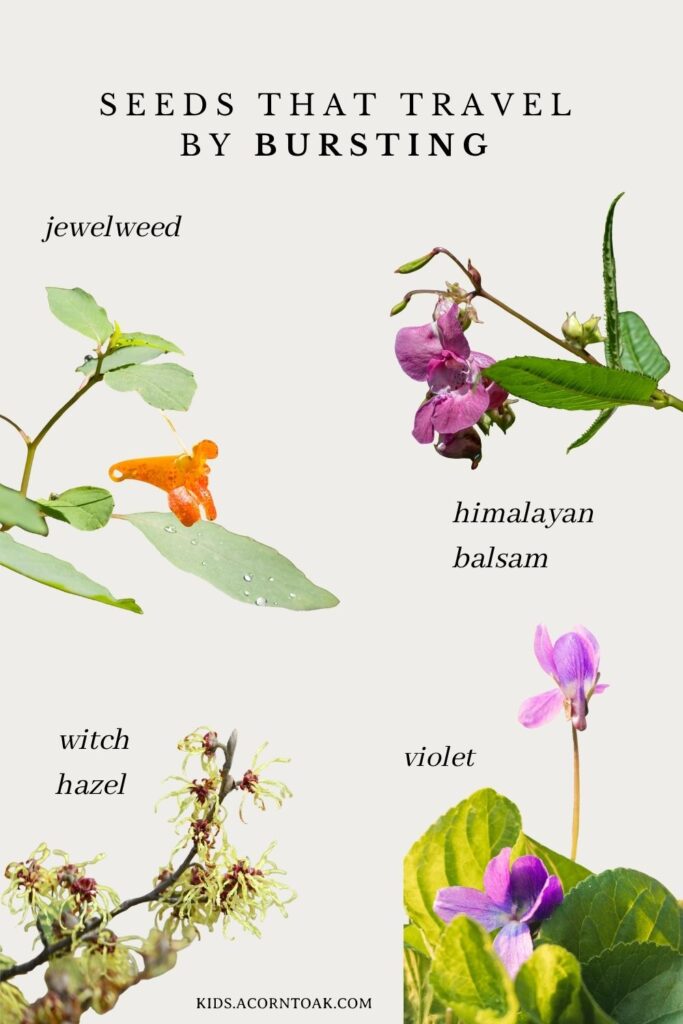
Seeds Travel by Bursting
While some seeds travel, other seeds explode! The jewelweed, also called a touch-me-not, and the Himalayan balsam have seeds that burst open when touched. These seeds can land several feet away from the parent plant. As a violet and witch hazel seed pod dries, it contracts and causes the seeds to launch out of it.
Next time you see a seed, take a moment and wonder how that seed can travel. Seeds have adapted to many different environments, predators, and weather. They have evolved in many ways that have helped them get around!
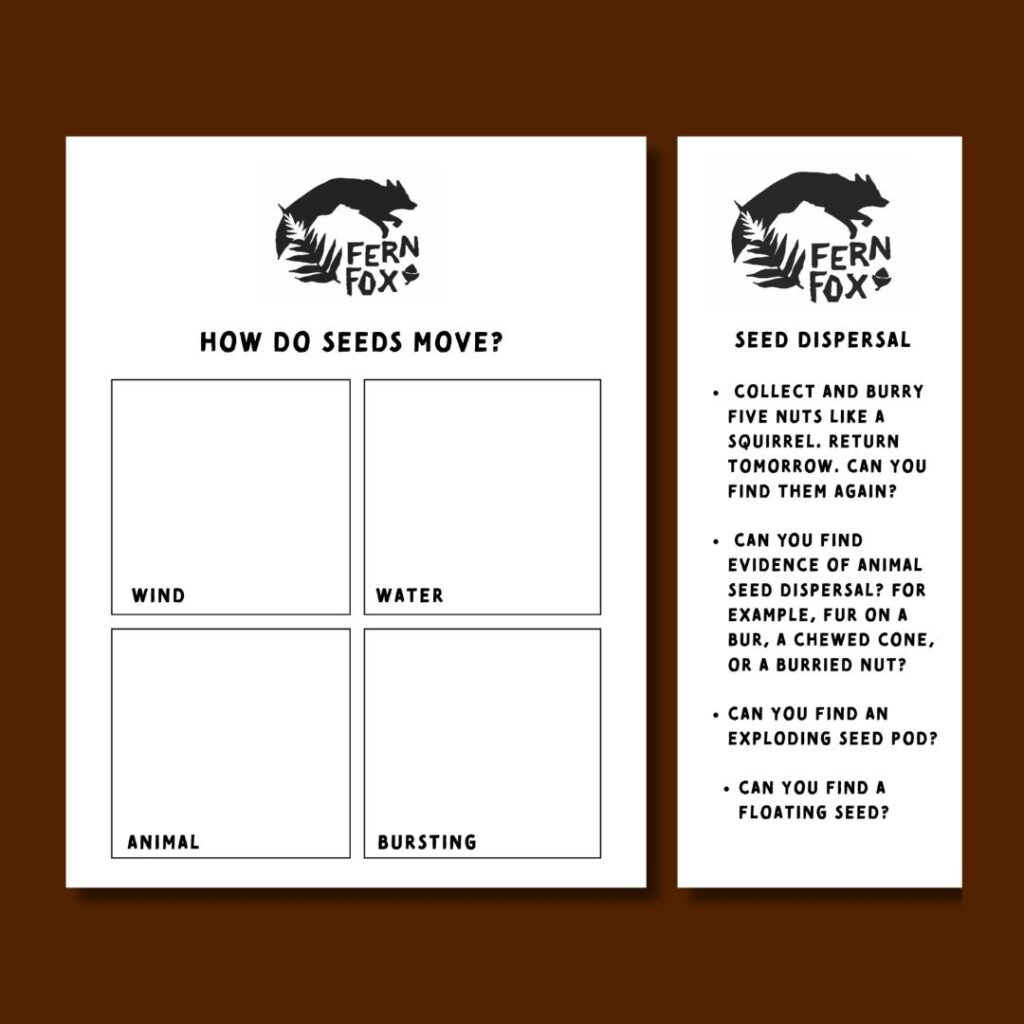
Learn more about seed dispersal with our Fern Fox Challenge!